
Smart Home & EnergyMonitoring Installationin Winchester & Hampshire
See exactly what your home generates, stores and uses, then set it to run when electricity is cheapest. Fitted and configured by the electrician who installed the system, with a free fixed quote typically within 48 hours.
25 years as a qualified electrician · NAPIT registered under Part P · MCS-qualified for solar and battery installation · 2-year workmanship guarantee.
25 years
Configured by a qualified electrician of 25 years, not a fitter.
Set up on site
Monitoring, tariff windows and app access demonstrated at handover.
NAPIT · Part P
All electrical work certified to the 18th Edition of BS 7671.
2-year guarantee
Workmanship guaranteed, plus manufacturer warranties.
You cannot reduce what you cannot see
Energy monitoring puts real figures on the electricity moving through your house: how much the roof is generating, how much the battery is holding, what the house is consuming right now, and what is being imported or exported. It is the difference between believing solar is working and knowing it is, and the difference between guessing which appliance costs you most and reading it off a screen.
Selenium Energy installs and configures monitoring and smart control across Winchester and Hampshire, usually alongside solar PV, battery storage or an EV charger, but also as a standalone upgrade on an existing installation. Steve is a qualified electrician of 25 years, NAPIT registered under Part P, and MCS-qualified for solar PV and battery installation, so the person configuring the system understands what the numbers are actually describing.
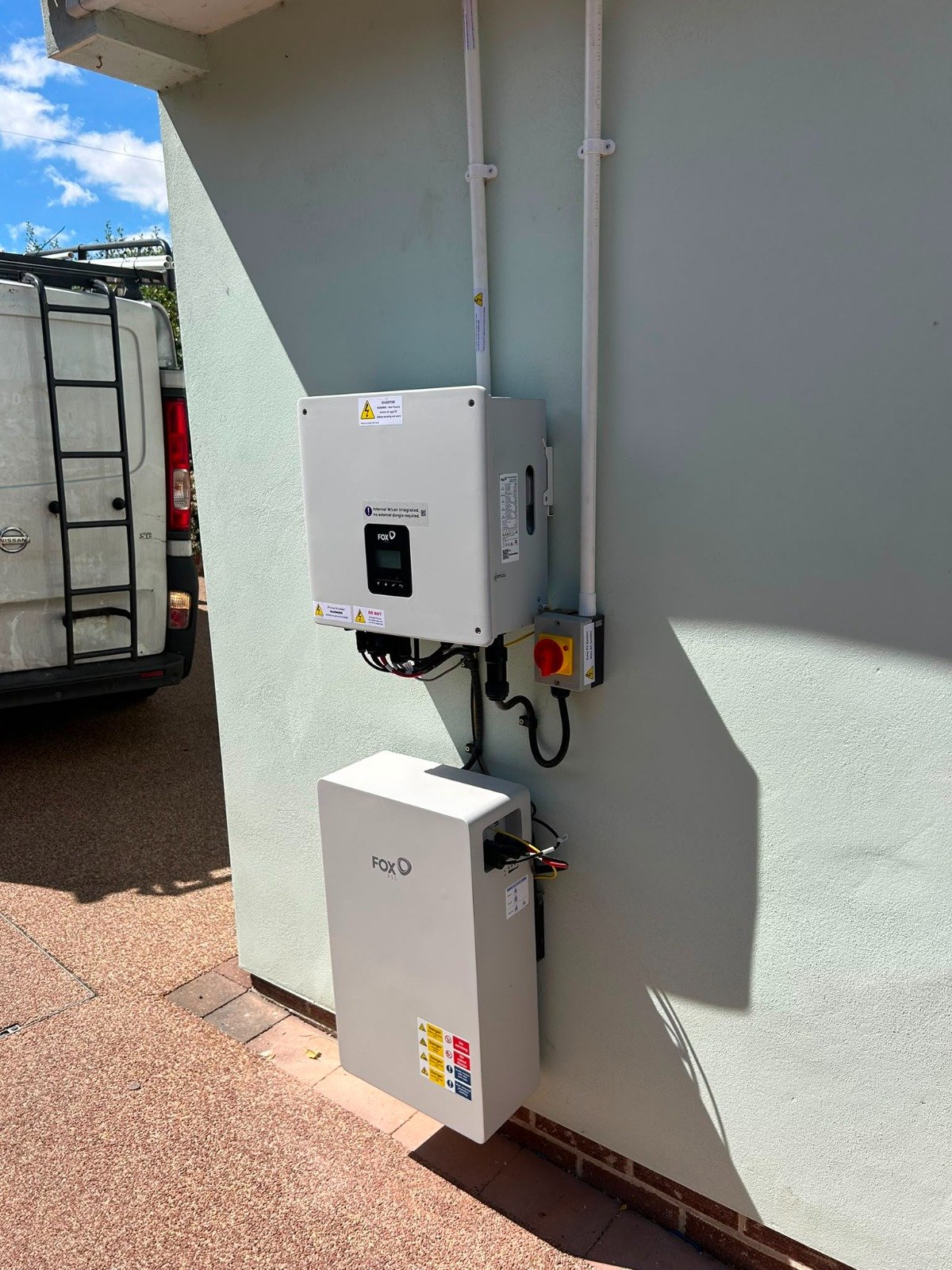
Practically, that means current transformers or a meter on the incoming supply, inverter and battery data brought into one place, tariff windows set so charging and discharging happen at the right times, and phone monitoring set up and demonstrated before we leave. Where an EV charger is involved we configure it to follow solar surplus or the cheap overnight rate.
It also covers the smart side of the house that people actually use: lighting control and scenes, switched circuits that can be automated, and safe, certified provision for the devices you want to add later. Quotes are free, fixed, and typically with you within 48 hours.
Monitoring and smart control suits you if
- You have solar or a battery and suspect it is not being used as well as it could be.
- You are on, or considering, a time-of-use tariff and want charging shifted to the cheap window automatically.
- You charge an electric car at home and want it to soak up surplus generation.
- You want to identify which appliances are quietly costing the most.
- You want lighting scenes, automated circuits or smart switching installed properly rather than plugged in.
- You run a business or workshop and want daytime consumption measured before investing in solar.
What happens when a system runs unmonitored and unconfigured
The commonest fault we find on other people's renewable installations is not broken hardware. It is hardware that was never set up.
A battery that never charges cheaply
Left on factory settings, storage charges from solar only and ignores your tariff entirely. Households on a cheap overnight rate lose the single biggest saving the equipment can deliver, every night, for years.
Export you should have kept
Without visibility, surplus generation leaves the house at export value while the immersion, dishwasher or car could have absorbed it at retail value. Nobody notices, because nothing looks wrong.
Faults that stay invisible
A string that has stopped producing or a battery module that is underperforming can go unnoticed for a whole season. Monitoring turns that into an alert instead of a surprise on a bill.
Common mistakes with monitoring and smart control
- Accepting a system handover with no app access and no explanation of what the figures mean.
- Relying on the supplier's smart meter display alone, which shows import but not generation or storage.
- Fitting current transformers on the wrong side of the incoming supply, so readings are meaningless.
- Buying plug-in smart devices for circuits that should be switched properly at the board.
- Setting charge windows once and never revisiting them after a tariff change.
- Automating heating or lighting with no manual override, so the house becomes unusable when the network drops.
How the installation and setup runs
Usually a single visit, with the whole system configured and demonstrated before we leave.
- 1
Survey and inspection
We review your existing solar, battery, charger and consumer unit, check the incoming supply position and confirm network coverage where the equipment needs it.
- 2
Diagnosis and specification
What you want to see and control determines the kit: metering or current transformers, gateway or hub, and any switching or circuit work needed at the board.
- 3
Free fixed written quote
One fixed price, typically within 48 hours, with any board or circuit work listed separately so nothing is a surprise.
- 4
Installation
Metering and sensors fitted on the incoming supply, gateway installed and connected, and any smart switching wired and protected properly at the consumer unit.
- 5
Configuration and verification
Inverter, battery and charger brought into one view, tariff charge and discharge windows set, readings cross-checked against the meter so we know they are accurate.
- 6
Handover, certification and guarantee
App access on your phone, a walk-through of what each figure means, certification for any electrical work under NAPIT and Part P, and our 2-year workmanship guarantee.
What monitoring changes
Automatic cheap-rate running
Charge and discharge windows set to your tariff mean the savings happen whether or not anybody remembers to think about it.
Proof your system is working
Generation, storage, consumption, import and export in one view, so a drop in performance is visible in days rather than seasons.
Findable running costs
Consumption data shows which loads are expensive, which is what turns vague intentions into specific, worthwhile changes.
Solar into the car
EV charging configured to follow surplus generation instead of exporting it, tested with your own vehicle at handover.
Smart control that is wired, not plugged
Lighting scenes and automated circuits installed at the board and certified, with manual override retained throughout.
Set up by the installer
The person configuring the system is the electrician who fitted it and who answers the phone afterwards.
Monitoring and smart control in detail
The specifics below determine whether monitoring becomes a habit you use or an app you open twice.
Measuring the right things in the right places
Whole-house monitoring starts at the incoming supply, using current transformers or a dedicated meter positioned so that import and export are measured correctly and separately from generation. Get that placement wrong and every derived figure - self-consumption, export, battery contribution - is wrong with it, which is why we cross-check readings against the utility meter before handover.
Circuit-level monitoring adds sensors on individual circuits at the board, which is worth doing where a specific load is under suspicion: an immersion heater, a workshop, an outbuilding or an underperforming heat source. On solar and battery installations, inverter and battery data is brought in directly so generation, state of charge and throughput sit alongside consumption in one view.
- Current transformers or metering on the incoming supply
- Circuit-level monitoring at the consumer unit where it is useful
- Inverter and battery data integrated into a single view
- EV charger data and scheduling included
- Readings verified against the utility meter at commissioning
Tariffs, scheduling and self-consumption
Time-of-use tariffs are where monitoring turns into money. Charge windows are set so the battery fills at the cheapest rate and holds through the expensive evening peak; discharge limits are set so it is not emptied before the peak arrives. On solar-aware EV chargers the same logic applies to the car, either following surplus generation during the day or filling on the low overnight rate.
Self-consumption is the number that matters most: the share of what you generate that you use yourself. Raising it is usually a matter of shifting flexible loads - washing, drying, dishwasher, immersion, car charging - into generation hours, and monitoring is what shows you whether the change actually worked.
Tariffs change. We set windows at commissioning and show you exactly where to adjust them, so a tariff switch next year does not silently undo the saving.
Smart lighting, switching and automation
Smart control done properly is wired work. Lighting scenes, dimming, zoned circuits and automated switching are installed at the board and at the switch, with correct dimmable drivers and retained manual control, so the lights still work when the internet does not.
We install smart switching and controls for lighting, outdoor and security lighting, heated towel rails, immersion diverters and outbuilding circuits, and provide the correct protection and labelling for each. Where a household wants to add devices themselves later, we make sure the circuits, neutrals and back boxes are there to do it safely.
What we will not do is automate something with no manual fallback. Every automated circuit keeps a way to control it by hand.
- Lighting scenes, dimming and zoned switching
- Automated outdoor and security lighting
- Immersion diverters and controlled heating circuits
- Provision, neutrals and back boxes for future smart devices
- Manual override retained on every automated circuit
Domestic and commercial monitoring
In a home, monitoring is about the evening peak, tariff timing and knowing that the roof and battery are earning what they should. Installation and configuration is usually a single visit alongside solar, storage or an EV charger.
For a business, measurement usually comes first. Half-hourly data and a measured daytime load profile from a workshop, office or farm building is the evidence that decides whether solar and storage are worth investing in, how large they should be, and where a demand peak is costing money. That data also underpins peak shaving with storage, which on some commercial tariffs is worth more than generation itself.
Either way the electrical work is certified to the 18th Edition of BS 7671 under NAPIT and Part P, and carries our 2-year workmanship guarantee.
Frequently asked questions
How much does energy monitoring cost to install?
It depends on what you want measured and whether any circuit or board work is needed, so we quote after a survey. The quote is free, fixed and typically with you within 48 hours, with board work shown as a separate line.
How long does installation take?
Most monitoring and smart control installations are a single visit of a few hours, including configuration, verification against your meter and a handover walk-through.
Can you add monitoring to solar somebody else installed?
Yes. We regularly bring existing inverters, batteries and chargers into one monitored view, and check at survey that your equipment supports it before quoting.
Will it actually save me money?
Monitoring itself does not save money; acting on it does. The two changes that reliably do are setting battery and EV charging to your cheapest tariff window and shifting flexible loads into generation hours: both of which we configure at installation.
Do I need a battery for this to be worthwhile?
No. Monitoring is often the first step, and for a business it is the evidence base for deciding whether solar or storage is worth investing in at all.
Is the electrical work certified?
Yes: all electrical work is tested and certified to the 18th Edition of BS 7671 under NAPIT and Part P.
What guarantee comes with it?
Two years on all workmanship, plus manufacturer warranties on the equipment supplied.
How long will the equipment last?
Metering, sensors and switching are long-lived; the shorter-lived part is usually the app and gateway software, which is why we fit equipment from established platforms that continue to be supported.
Will the lights still work if the internet goes down?
Yes. Every automated circuit we install keeps manual control, so nothing in the house depends on a network connection to be usable.
Which areas do you cover?
We are based in Winchester and work across Hampshire, including Basingstoke, Southampton, Andover, Portsmouth, Salisbury, Reading and Oxford.
Next step
Start on the home page, see finished installs on our work, or send your details through the contact page.
Find out what your home is really doing with its electricity
Monitoring installed, tariff windows configured and everything demonstrated before we leave: with a free fixed quote typically within 48 hours. Send your details and Steve will call you back.
Steve Higgins · NAPIT registered · OZEV authorised · 2-year workmanship guarantee · Enquire online 24/7 · On site 7am–6pm