
Solar Panel Installationin Winchester & Hampshireby the Electrician Who Quotes It
A designed, fitted and commissioned solar system: usually completed in a single day, at 0% VAT, with a fixed written quote typically within 48 hours of the survey. No salespeople, no call centre, no handing your roof to a subcontractor.
25 years as a qualified electrician · NAPIT registered and RECC registered · MCS accreditation in progress · 2-year workmanship guarantee on top of manufacturer warranties up to 30 years.
25 years
Steve has worked as a qualified electrician for 25 years.
NAPIT & RECC
NAPIT registered under Part P, plus Renewable Energy Consumer Code registration.
0% VAT
Solar and battery installations currently carry 0% VAT, no tax added to the quote.
48-hour quotes
Free survey, with your fixed written quote typically back within 48 hours.
Solar PV that is designed around your roof, not a sales script
A solar photovoltaic system turns daylight falling on your roof into electricity your house uses first, before it draws anything from the grid. Every kilowatt-hour you generate and use yourself is a kilowatt-hour you are not buying at retail price. That is the entire mechanism, and it is why sizing matters more than sales patter: a system that produces electricity at the wrong times of day for your household will always underperform a smaller, better-matched one.
Selenium Energy designs domestic and commercial solar systems in Winchester and across Hampshire, and the person who surveys your roof is the person who installs it. Steve is a qualified electrician of 25 years and is MCS-qualified for solar PV and battery installation; the company's MCS accreditation is currently in progress. We are registered with RECC, the Renewable Energy Consumer Code, and every electrical element of the installation is certified to the 18th Edition of BS 7671 under NAPIT and Part P.
The survey covers the things that decide real output: roof pitch and orientation, rafter condition and spacing, shading from chimneys, dormers and trees through the day, the route for DC and AC cabling, the state of your consumer unit, and where an inverter and battery can live safely and quietly. From that we produce one fixed written quote, usually within 48 hours, with the panel count, inverter, any battery, and the total cost set out in plain English.
Most domestic installations are completed in a single day. A 25% deposit secures your installation date and the balance is due on completion, once you have seen the system working and are happy with it. Solar and battery work currently carries 0% VAT, so the figure on the quote is the figure you pay.
Solar PV is worth quoting if
- You own a house in Winchester, Hampshire or the surrounding towns with a south, east or west facing roof slope.
- Your electricity bill has become one of the larger fixed costs in the household budget.
- Somebody is home during the day, or you can shift washing, drying and EV charging into daylight hours.
- You are adding an EV charger, a heat pump or an extension and your electrical demand is about to rise.
- You want battery storage now, or a system that a battery can be added to later without rework.
- You have had a quote from a national installer and want a like-for-like figure from a local electrician.
- You already have panels and need them serviced, repaired or an underperforming system diagnosed.
What a badly specified solar installation actually costs you
Solar hardware is reliable. The failures we get called out to are almost always design and workmanship failures: wrong sizing, weak roof fixings, poor DC routing, no commissioning data, and they are expensive precisely because they are hidden on a roof for years before anybody notices.
An oversized array you never use
Export earns a fraction of what import costs. A system sized to fill the roof rather than match your usage sends its best output to the grid while you keep buying electricity at teatime, and the payback period quietly doubles.
Water ingress and roof damage
Fixings driven into battens instead of rafters, or flashed badly under tiles, let water track into the loft. That becomes a roofing bill, an insulation bill and sometimes a ceiling bill: none of which is covered by a panel warranty.
No certification when you sell
Uncertified alterations to your consumer unit and no commissioning paperwork means questions during a sale or a landlord inspection, and remedial work booked at your expense to put the electrical side right.
Common mistakes we are asked to correct
- Buying on panel count alone, with no inverter or battery sizing to match daytime consumption.
- Signing on a first visit under a discount that expires that evening.
- Accepting a quote where the surveyor, designer and installer are three different companies and nobody owns the outcome.
- Fitting a hybrid inverter too small to ever accept the battery that was promised as a later upgrade.
- Leaving an old consumer unit in place when the array is connected, so the whole house protection is the weakest link.
- No shading assessment, so a single chimney costs several hundred kilowatt-hours a year on a string that could have been re-routed.
How your solar installation runs, step by step
Five stages, one person accountable throughout. You have Steve's mobile number from the first call to the final certificate.
- 1
Free survey and inspection
We measure the roof, check rafters and tile type, map shading through the day, inspect your consumer unit and earthing, and agree where the inverter and any battery will be sited.
- 2
Design and fixed written quote
You get one written quote, typically within 48 hours: panel count and output, inverter, battery if included, expected generation and the total price at 0% VAT. No pressure and no follow-up chasing.
- 3
Scheduling and deposit
A 25% deposit secures your date. We confirm scaffold requirements, access and the working day, and order equipment against the agreed specification.
- 4
Installation, usually in a day
Mounting rails to rafters, panels fitted and clamped, DC routed and labelled, inverter and isolators mounted, AC connection made, and the site cleared and swept before we leave.
- 5
Testing and commissioning
Full electrical testing to BS 7671, inverter commissioning, monitoring set up on your phone, and a handover where we show you what the system does on a normal day.
- 6
Certification and guarantee
Electrical certification under NAPIT and Part P, manufacturer warranty documents up to 30 years depending on brand, and our 2-year workmanship guarantee. Balance due on completion.
What you get from a Selenium Energy solar system
One day on site, in most cases
A typical domestic array and inverter is installed, tested and commissioned within a single working day, so your household loses one day, not a fortnight.
0% VAT on the whole job
Solar and battery installations currently carry 0% VAT, which is applied to the quote rather than described as a discount later.
Sized around your actual usage
Systems are designed around how your household really uses electricity, so generation is used at home rather than exported for a fraction of what you pay to buy it back.
Electrical work certified properly
Every connection is tested and certified to the 18th Edition of BS 7671 under NAPIT and Part P, so the paperwork stands up at sale or inspection.
Longevity designed in
Panels clamped to rafters with correctly flashed fixings, DC cable supported and UV-rated, and equipment covered by manufacturer warranties up to 30 years.
One accountable person
Steve quotes, installs, commissions and answers the phone afterwards. No salesperson, no subcontractor, no call centre in between.
Solar PV in detail: equipment, methods and variations
This section covers the parts of a solar installation that decide how it performs for the next 25 years: useful whether you are comparing our quote against another or simply working out what to ask for.
Panels, inverters and mounting hardware
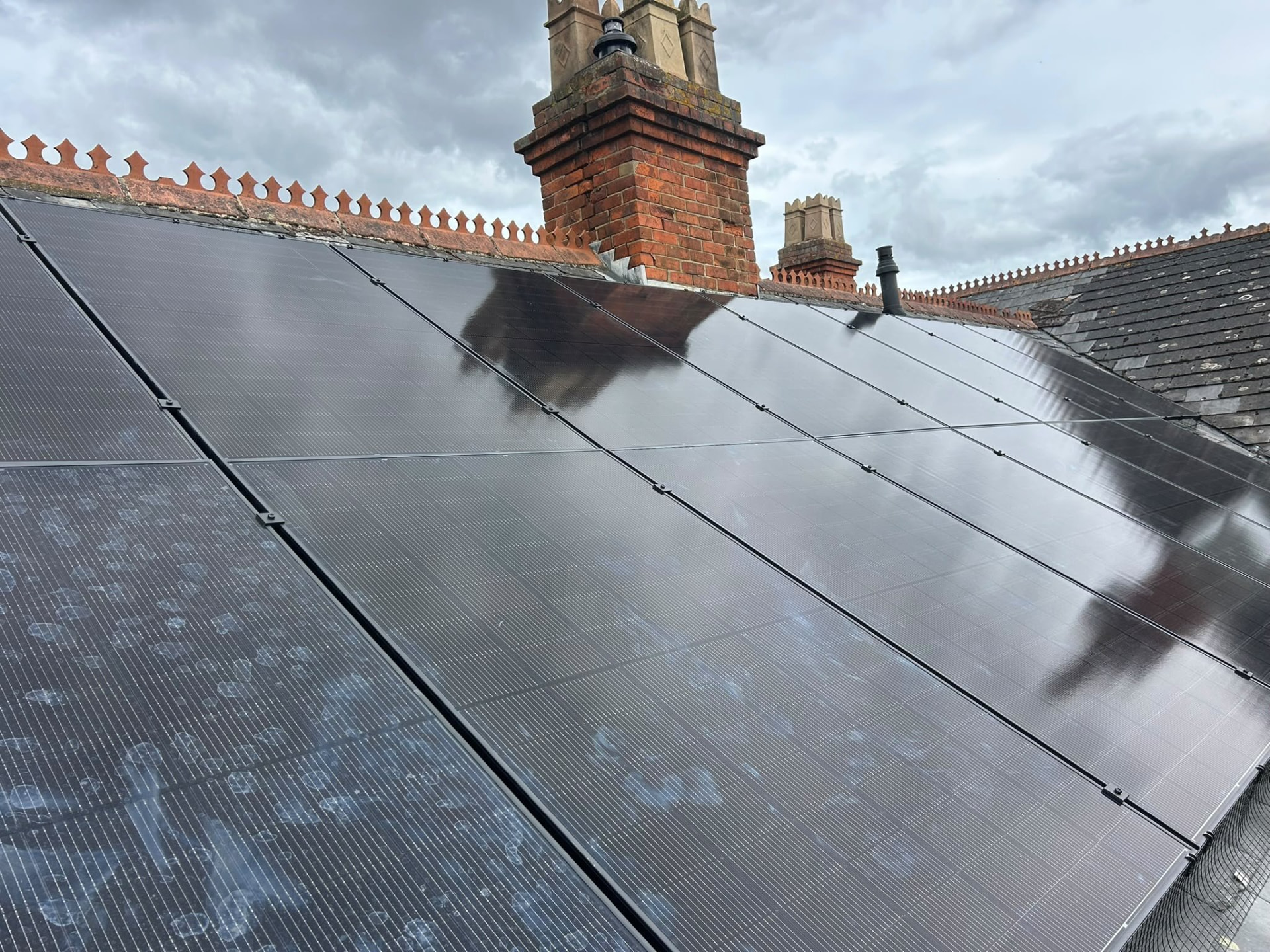
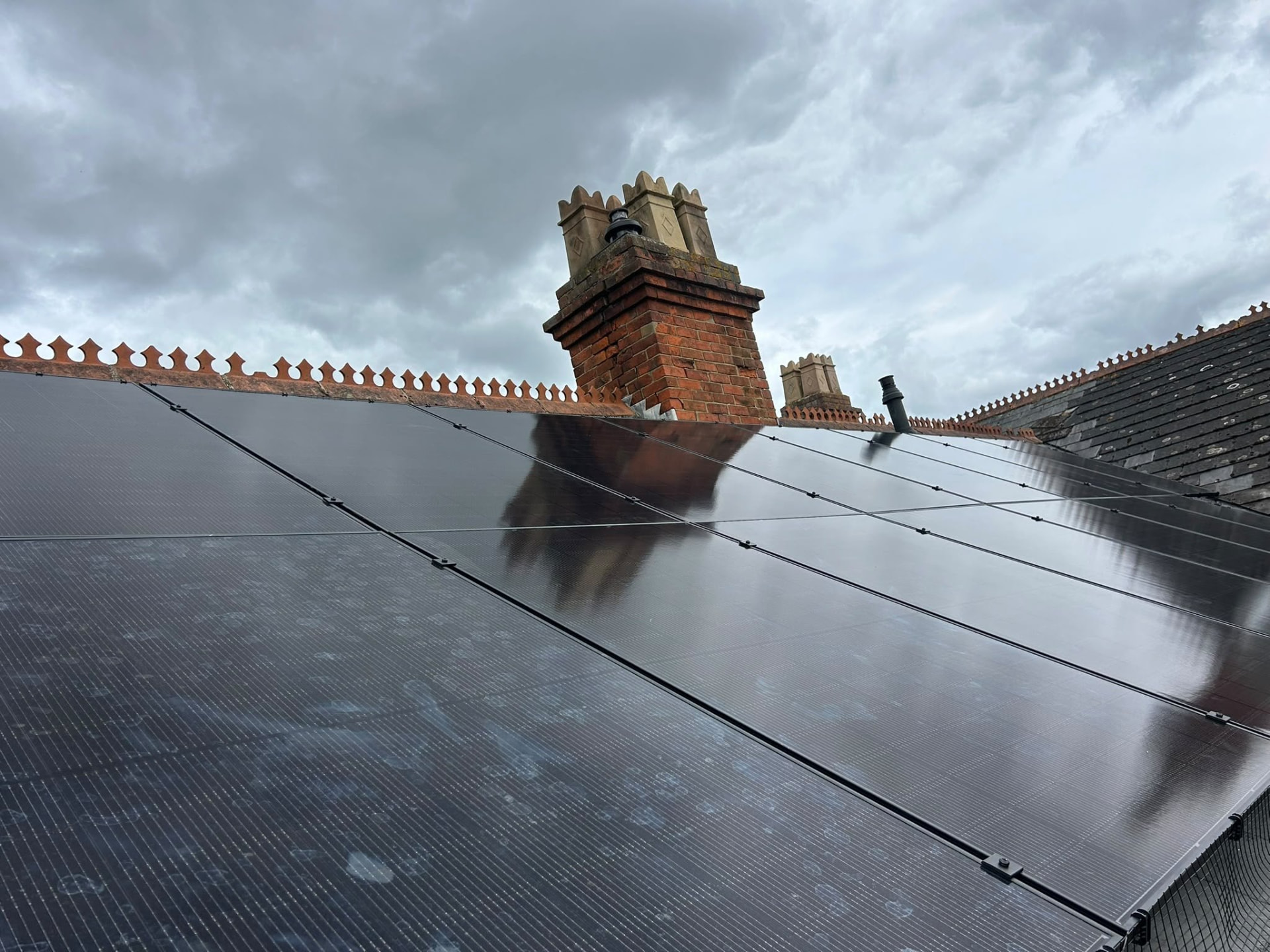
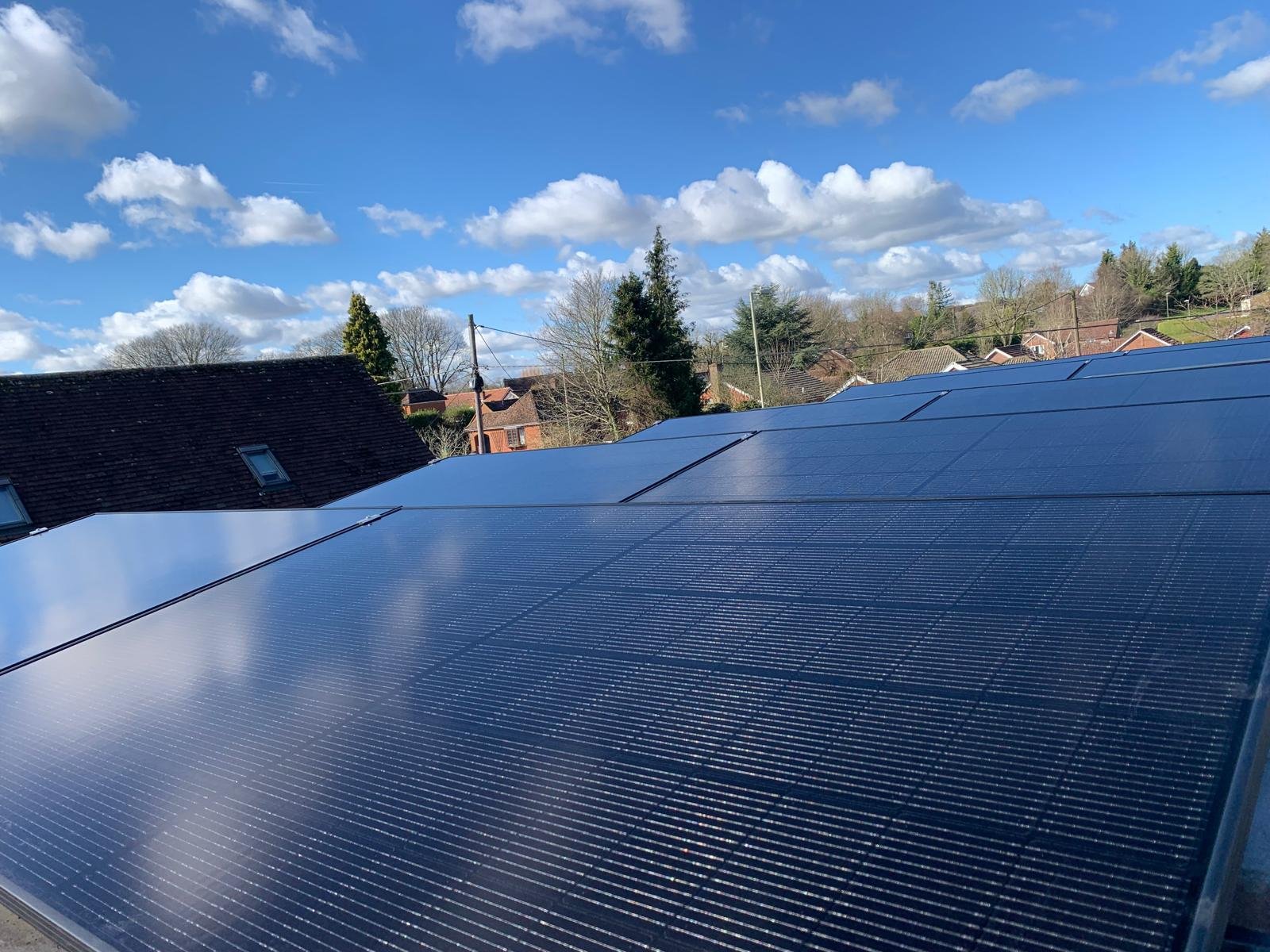
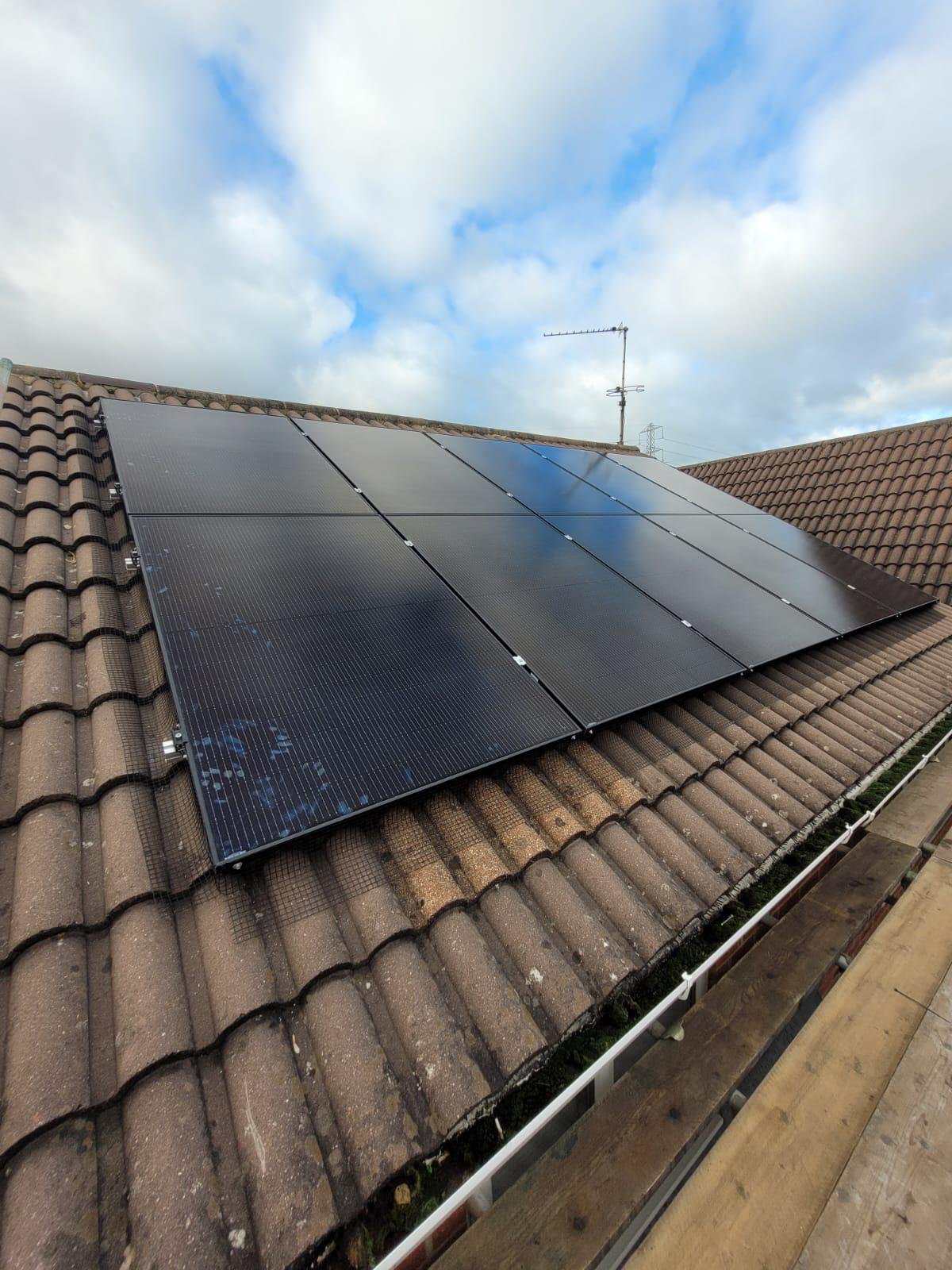
We fit all-black monocrystalline modules as standard because they suit Hampshire's mix of brick, flint and tile far better than silver-framed panels, and modern all-black modules no longer cost meaningful efficiency to achieve it. Panels are clamped to aluminium rails that are through-fixed to rafters, not battens, with flashings or hooks appropriate to your tile or slate profile.
Inverter choice is where a system is won or lost. A string inverter is the right answer on a simple, unshaded roof. A hybrid inverter is the right answer where a battery is included now or planned later, and it must be sized for that future battery rather than for today's array alone. On roofs with unavoidable shading we look at panel-level optimisation on the affected string rather than accepting the loss across the array.
Recent installs give a realistic picture of specification and cost: 10 panels with a Fox EP6 5.76kWh battery and Fox inverter at £6,995; 13 panels with two Fox 5kW batteries at £8,500; 12 panels with a Sigenergy 10kW battery and 5kW inverter at £8,900. Every roof is different, so yours is quoted individually rather than sold off a price list.
- All-black monocrystalline modules as standard
- Fox, Sigenergy and other established inverter and battery platforms
- Rail systems through-fixed to rafters with tile-appropriate flashing
- Hybrid inverters sized for battery capacity, present or planned
- DC isolators, AC isolators and full labelling to BS 7671
- Phone monitoring set up and demonstrated at handover
Roof types and mounting variations across Hampshire
Winchester and the surrounding villages throw up plain clay tile, concrete interlocking tile, natural and fibre cement slate, and the occasional flat or low-pitch roof on an extension. Each takes a different fixing: hooks under interlocking tile, flashed brackets on plain tile and slate, and ballasted or bracket-fixed frames on flat roofs where the covering must not be penetrated.
East-west split arrays are frequently the better choice on Hampshire semis and terraces. They produce a lower peak than a single south slope but spread generation across morning and evening, which matches when most households actually use electricity, and with a battery in the system that shape is often worth more than a higher midday peak.
Where a property is in a conservation area or affects a listed building, we will tell you plainly at survey what is likely to be acceptable and what is not, rather than quoting for an array that will not get through.
Batteries, EV charging and whole-home energy
Solar without storage sends surplus daytime generation to the grid; solar with storage keeps it for the evening peak, which is when a typical household spends most on electricity. We fit new battery systems and retrofit storage to existing solar, so a system installed by somebody else can still be brought up to date.
If you drive an electric car, the two jobs belong together. We are OZEV authorised for EV charger installation and fit Fox, Zappi, Ohme and Wallbox units, so charging can be scheduled to run on solar surplus or on a cheap overnight tariff and the load can be managed alongside the rest of the house.
Energy monitoring ties it together: seeing what the house generates, stores and consumes is what makes behaviour change stick, and it is what tells you whether a further battery module is worth buying.
- New battery systems and retrofit storage to existing arrays
- EV charger installation by an OZEV authorised installer
- Consumer unit upgrades where existing boards cannot take the new circuits
- Monitoring and tariff scheduling to charge when electricity is cheapest
Domestic and commercial installations
Domestic work is usually a single-day installation on a pitched roof, with the array sized around household consumption and a battery to cover the evening. Paperwork, certification and handover are all completed the same week.
Commercial installations - workshops, offices, farm and light industrial buildings - are sized around a daytime load profile instead, which often makes them the stronger case: businesses tend to consume most of what they generate as they generate it. Larger roofs bring three-phase supplies, half-hourly metering data, and access and scaffold planning around trading hours, all of which we handle as part of the quote.
In both cases the same person surveys, designs, installs and certifies the work, and the same 2-year workmanship guarantee applies on top of the manufacturer warranties.
Frequently asked questions
How much does solar panel installation cost in Winchester?
Every roof is different, so solar is quoted individually rather than sold from a price list. Recent installs have ranged from £6,995 for 10 panels with a Fox EP6 5.76kWh battery and inverter, to £8,900 for 12 panels with a Sigenergy 10kW battery and 5kW inverter. Solar and battery installations also currently carry 0% VAT, and your survey and quote are free.
How quickly will I get my quote?
Surveys and quotes are free and your fixed written quote is typically with you within 48 hours of the visit. You deal directly with Steve throughout: there are no salespeople and no follow-up pressure.
How long does the installation take?
Most domestic solar and battery systems are installed, tested and commissioned in a single day. Larger or commercial roofs and jobs that need scaffold across multiple elevations are scheduled with a clear day count agreed in advance.
Are you MCS certified?
Steve is MCS-qualified for solar PV and battery installation and the company's MCS accreditation is currently in progress. We are registered with RECC, the Renewable Energy Consumer Code, NAPIT registered under Part P, and OZEV authorised for EV charger installations.
What guarantee comes with the work?
All workmanship is guaranteed for two years, on top of manufacturer warranties on the equipment supplied: up to 30 years depending on the brand. All electrical work is certified to the 18th Edition of BS 7671 under NAPIT and Part P.
How long will the system last?
Panels are warranted by their manufacturers for decades, up to 30 years depending on brand, and continue producing beyond that at gradually reduced output. Inverters and batteries carry shorter manufacturer warranties, which is why we set out each warranty period on the quote rather than quoting one headline figure.
Can I add a battery to solar panels I already have?
Usually yes. We retrofit battery storage to existing arrays, including systems installed by other companies. At survey we check your existing inverter and consumer unit to see whether an AC-coupled battery or a hybrid inverter change is the better route, and quote both if it is close.
How does payment work?
A 25% deposit secures your installation date, with the balance due on completion once the system is commissioned and you are happy with the work.
Do you cover my area?
We are based in Winchester and work across Hampshire, including Basingstoke, Southampton, Andover, Portsmouth, Salisbury, Reading and Oxford.
What if something goes wrong after installation?
You call Steve on the number that quoted the job. Online enquiries are taken 24/7, on-site work runs 7am to 6pm Monday to Saturday, and emergency call-outs are available outside standard hours.
Next step
Start on the home page, see finished installs on our work, or send your details through the contact page.
Get a fixed written solar quote, usually within 48 hours
Free survey, one accountable electrician, 0% VAT and a 2-year workmanship guarantee. Send your details and Steve will call you back to arrange the visit.
Steve Higgins · NAPIT registered · OZEV authorised · 2-year workmanship guarantee · Enquire online 24/7 · On site 7am–6pm